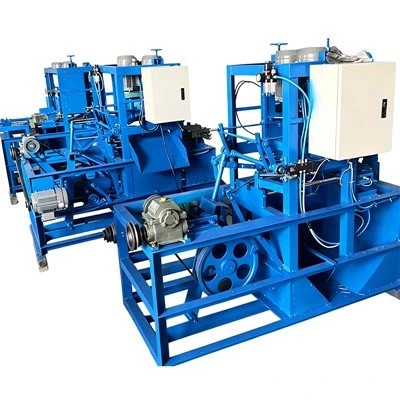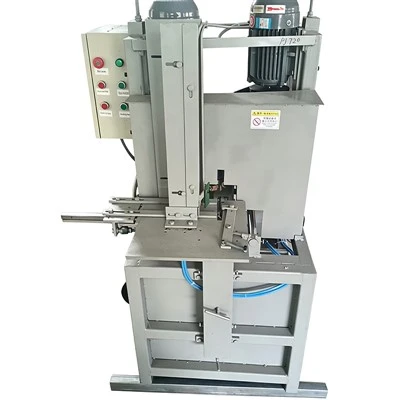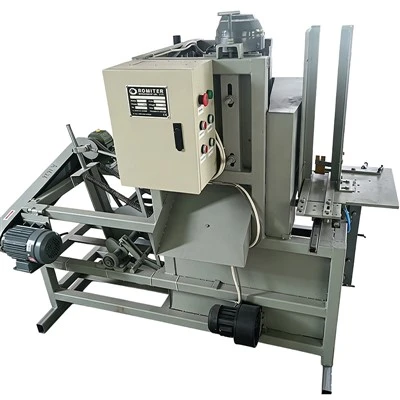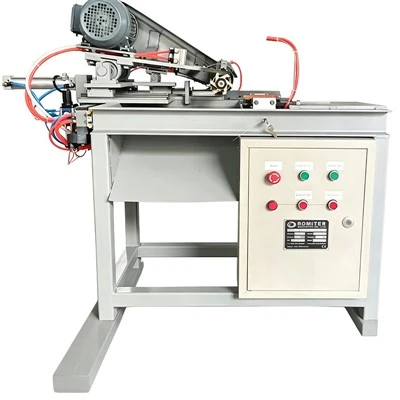
Prioritizing Process Compatibility and High-Efficiency Mass Production
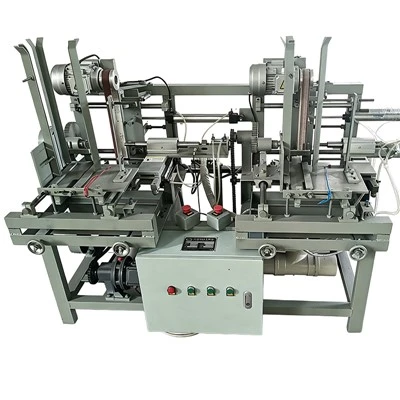
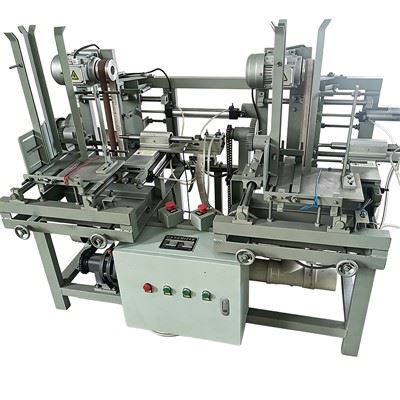
Tailored to the processing characteristics of wooden handles-which are often rotational bodies or irregularly shaped-the equipment utilizes a design combining workpiece rotation with a profile-following tool rest or CNC programming. This enables the single-pass forming of complex curved surfaces, eliminates issues like "tool deflection" common in traditional machining, and significantly boosts cutting efficiency.
Features an integrated multi-process design that combines cutting, shaping, sanding, and threading. This reduces downtime between process steps and meets mass production requirements for various handle types, such as those for hoes, pickaxes, and knives.
Equipped with a rapid-cycle hydraulic system or high-speed servo feed mechanism to minimize cycle times, increasing hourly output by over 30% compared to traditional equipment.
Ensuring Precision Stability and Structural Rigidity
Core transmission components-including the machine body, solid spindle, and reinforced tool rest-are built for robustness. This design enhances overall machine rigidity to withstand uneven wood density and fluctuating cutting forces, preventing precision drift during prolonged operation.
Critical clamping mechanisms strictly adhere to safety standards, ensuring proper clamping length and tolerance fit for the handle. Radial runout is controlled to ≤0.01mm, guaranteeing consistency in the handle's outer diameter and curvature.
Incorporates a fully closed-loop feedback system that uses linear scales to correct motion errors in real-time. With a repeatability of ±0.02mm, the system meets the high-precision machining requirements for handles featuring intricate decorative patterns or complex curved surfaces.