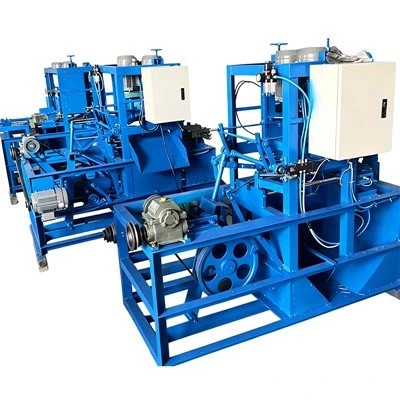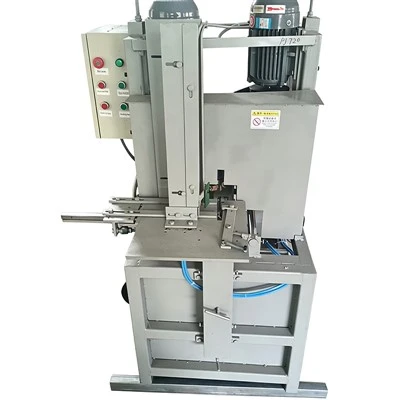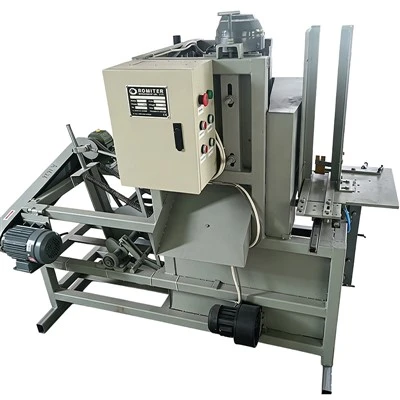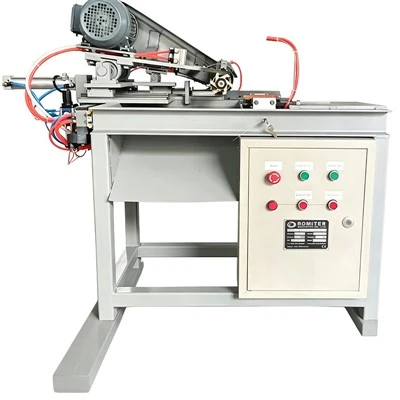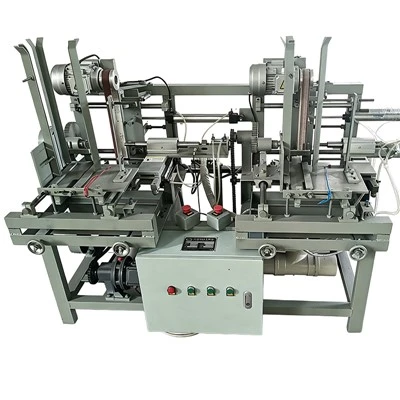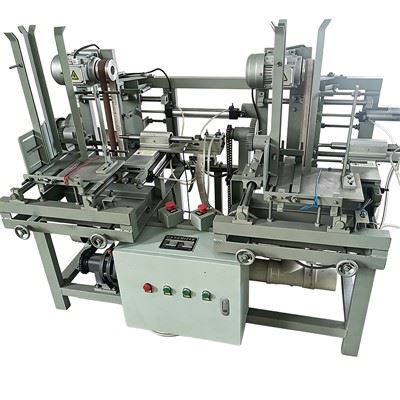
First, Clarify Your Core Production Needs
This is the fundamental prerequisite for equipment selection and directly determines the type of machinery required:
Primary Product Type: If focusing on household brushes (e.g., toothbrushes, brooms, toilet brushes), prioritize general-purpose high-speed tufting machines. If focusing on industrial brush rollers, disc brushes, or irregularly shaped strip brushes, you must select specialized integrated tufting machines designed for rollers or discs to avoid the limitations standard equipment faces with large-sized or complex-shaped workpieces.
Production Capacity and Batch Characteristics: For small-to-medium batches of standard parts (monthly output of 500–5,000 units), semi-automatic models suffice. For 24-hour "lights-out" factories or large-scale mass production, prioritize fully automated lines with automatic loading and unloading capabilities, which can boost daily output to over 3,000 units.
Bristle Material Range: Standard equipment is sufficient for processing common PP or PET plastic filaments. However, if working with steel wire, abrasive filaments, or specialty animal hair, you must ensure the equipment's drilling torque and tufting clamping force are compatible with high-strength materials to prevent issues like broken needles or bristle shedding.
Match Core Equipment Performance Indicators
Focus on verifying key parameters that determine machining precision and stability to avoid being misled by exaggerated specifications:
Machining Precision Grade: Standard consumer brushes typically require a bristle-end flatness tolerance of ≤±0.1mm. For high-end precision brushes (e.g., endoscope cleaning brushes or electric toothbrush heads), select models featuring a fully closed-loop control system equipped with linear scales for real-time positional error compensation; this maintains consistent precision at ±0.02mm and can reduce the defect rate from 12% to approximately 2%.
Changeover and Setup Efficiency: For scenarios involving diverse, small-batch custom orders, prioritize models featuring modular quick-change fixture libraries and built-in process libraries containing 200 standard brush types. This allows setup time when switching between brush types to be reduced from 4–6 hours to under one hour, significantly improving delivery efficiency for small orders. Drive and Structural Configuration: For the mass production of heavy-duty industrial brushes, a hybrid drive configuration-featuring linear motors for the XYZ axes and torque motors for the AC axes-is recommended; this setup enables accelerations exceeding 2G and feed rates of 60 m/min, significantly boosting production capacity.