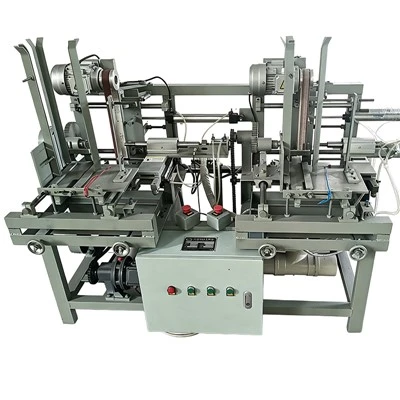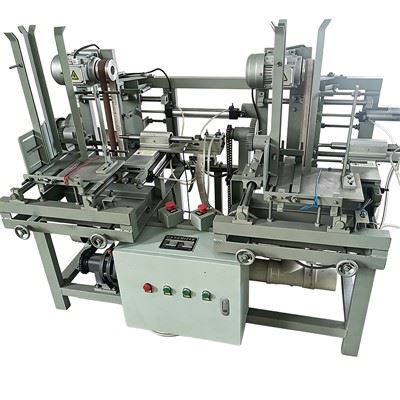
Matching Your Production Environment
Select Axis Configuration Based on Product Type: Choose a 2-axis high-speed machine for flat, thin-handled brooms; a 4-axis model for curved or thick-handled toilet brushes; and a 5-axis drilling and tufting machine for irregularly shaped, hole-free brushes to ensure equipment capabilities align with the product.
Determine Automation Level Based on Production Capacity: Small workshops should opt for semi-automatic models (capacity: 200 tufts/hour; cost: $8,000–$12,000), while medium-to-large factories should choose fully CNC models (capacity: over 500 tufts/hour).
Verify Material Compatibility: The equipment must be compatible with various bristle types-such as PP, nylon, tapered filaments, and animal hair-and accommodate different handle materials, including plastic, wood, and metal.
Key Performance Benchmarks
Tufting Precision: Standard models require a repeat positioning accuracy of ≤±0.02mm and a post-tufting brush surface flatness error of less than 0.5mm to prevent issues like hole misalignment or missed tufts during prolonged high-speed operation.
Operational Stability: Prioritize models driven by brushless motors; these can achieve high-speed tufting rates of 800–1,200 holes per minute and offer a Mean Time Between Failures (MTBF) of ≥2,000 hours.
Machine Rigidity: The machine body should feature a high-strength cast-iron structure and utilize imported guide rails; avoid low-cost equipment that relies on stepper motors and standard rails, which are prone to step loss and wear during long-term operation.